What electrical component opposes the flow of current in a DC circuit?
Show the answer and why
Answer B. Resistor
A resistor opposes the flow of current in a DC circuit.
Describe this graphic in words
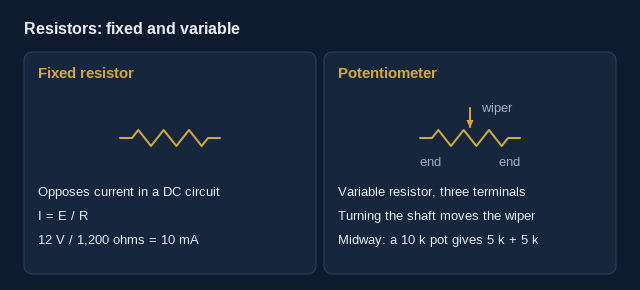
Two panels. The left panel shows the zigzag symbol of a fixed resistor, which opposes current in a DC circuit, with I = E / R and the example 12 V across 1,200 ohms giving 10 mA. The right panel shows a potentiometer, a resistor symbol with a wiper arrow dropping onto it, with three terminals (two ends and the wiper); turning the shaft moves the wiper, and a 10 k pot at its midpoint gives 5 k on each side.
A resistor is made to oppose current: the more resistance, the less current flows for a given voltage. Ohm's law says I = E / R, so 12 V across 1,200 ohms passes 12 / 1,200 = 0.01 A (10 mA), and doubling the resistor to 2,400 ohms halves that to 5 mA.
Resistance is measured in ohms, and the energy a resistor removes from the current is given off as heat, which is why resistors carry a power rating. This is a teaching note.
Why the other choices are wrong
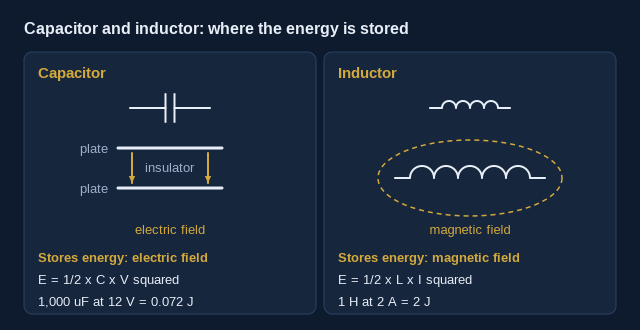
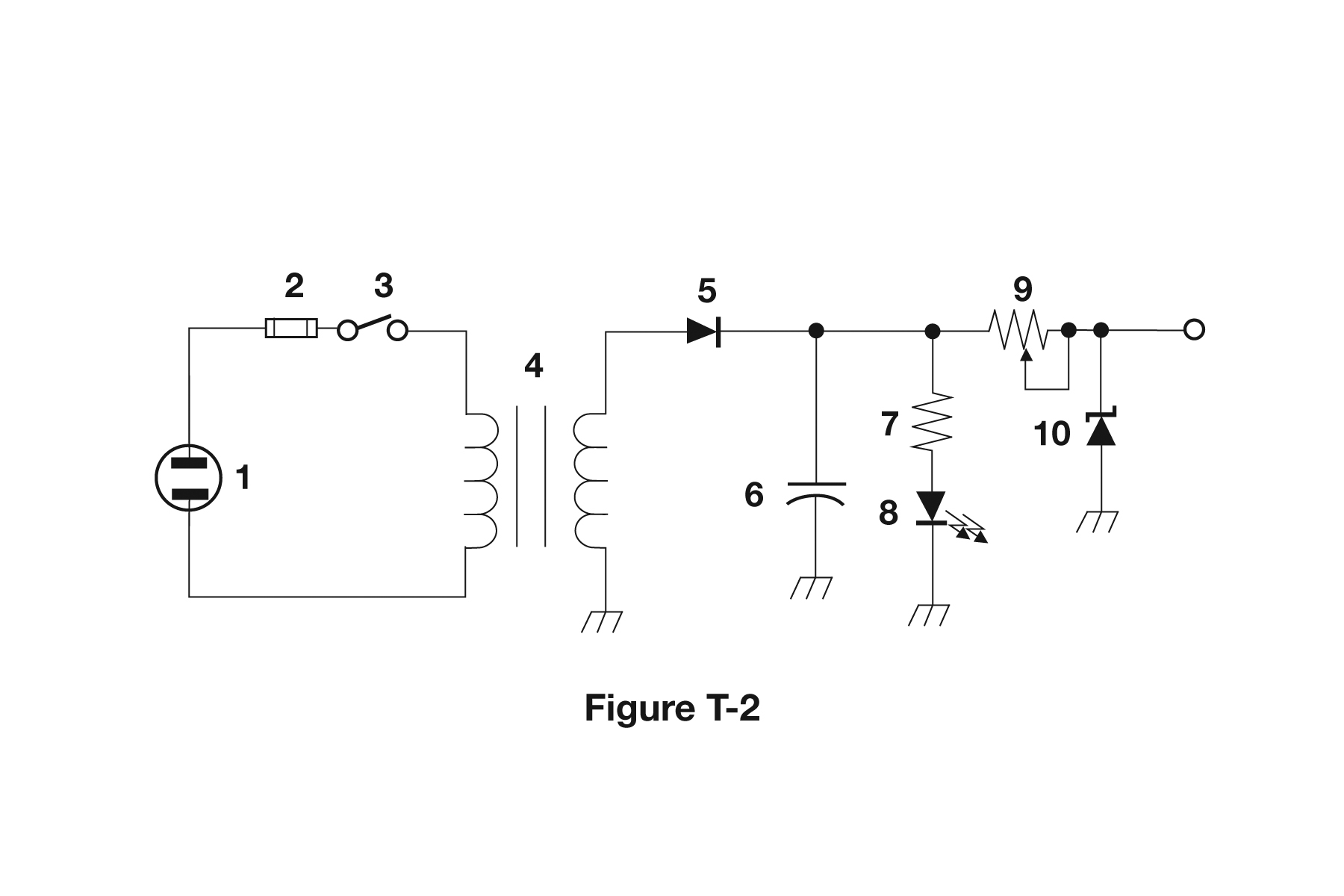
- A. An inductor opposes changes in current, not steady DC; once the current is steady a coil passes it with only the small resistance of its wire.
- C. An inverter is a circuit that converts DC into AC; it is not a basic part for opposing current.
- D. A transformer moves AC energy between windings by magnetic coupling; steady DC does not pass through it, and it is not what limits DC current.
Rule text checked against the official source on November 5, 2026. This is a study aid; the linked rule is what governs.